Kalispell, MT · Walk Deck

Waterproof Walk Deck

A waterproof walk deck over living space on a golf-course home in Kalispell. Anything that gets past the surface has to go somewhere, so the deck is built to move water back out and off the edge instead of into the wall or the framing below.

The flashing is what makes it work. Metal pan flashing is formed at every post base and outside corner and lapped up behind the weather barrier, so water that reaches the wall drains back onto the deck. Then every seam gets detailed before the fluid-applied membrane goes down.
Deck Waterproofing
Field sequence

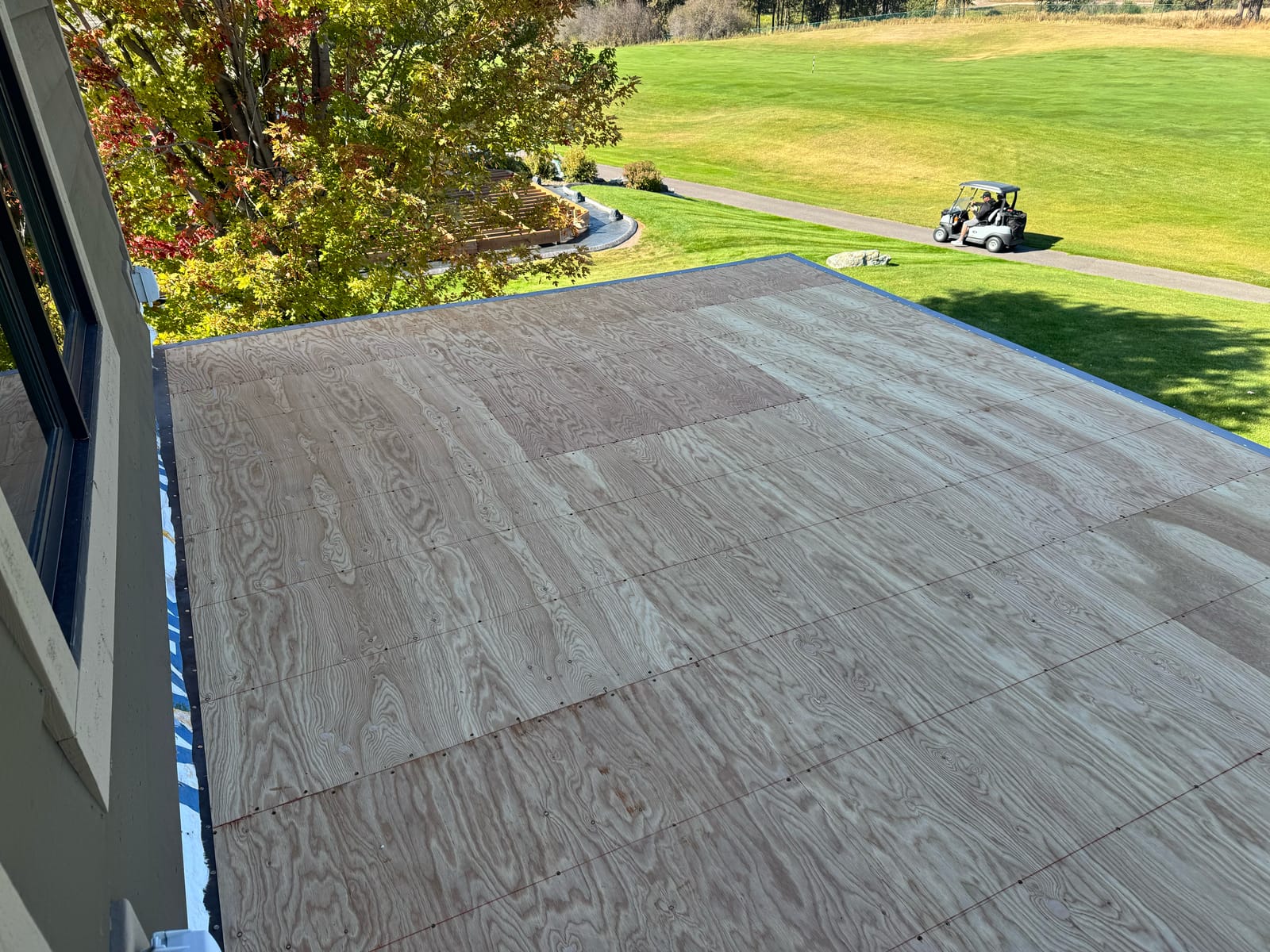
Bare plywood walk-deck substrate with perimeter edge metal flashing.
Plywood deck substrate with the perimeter edge metal set.
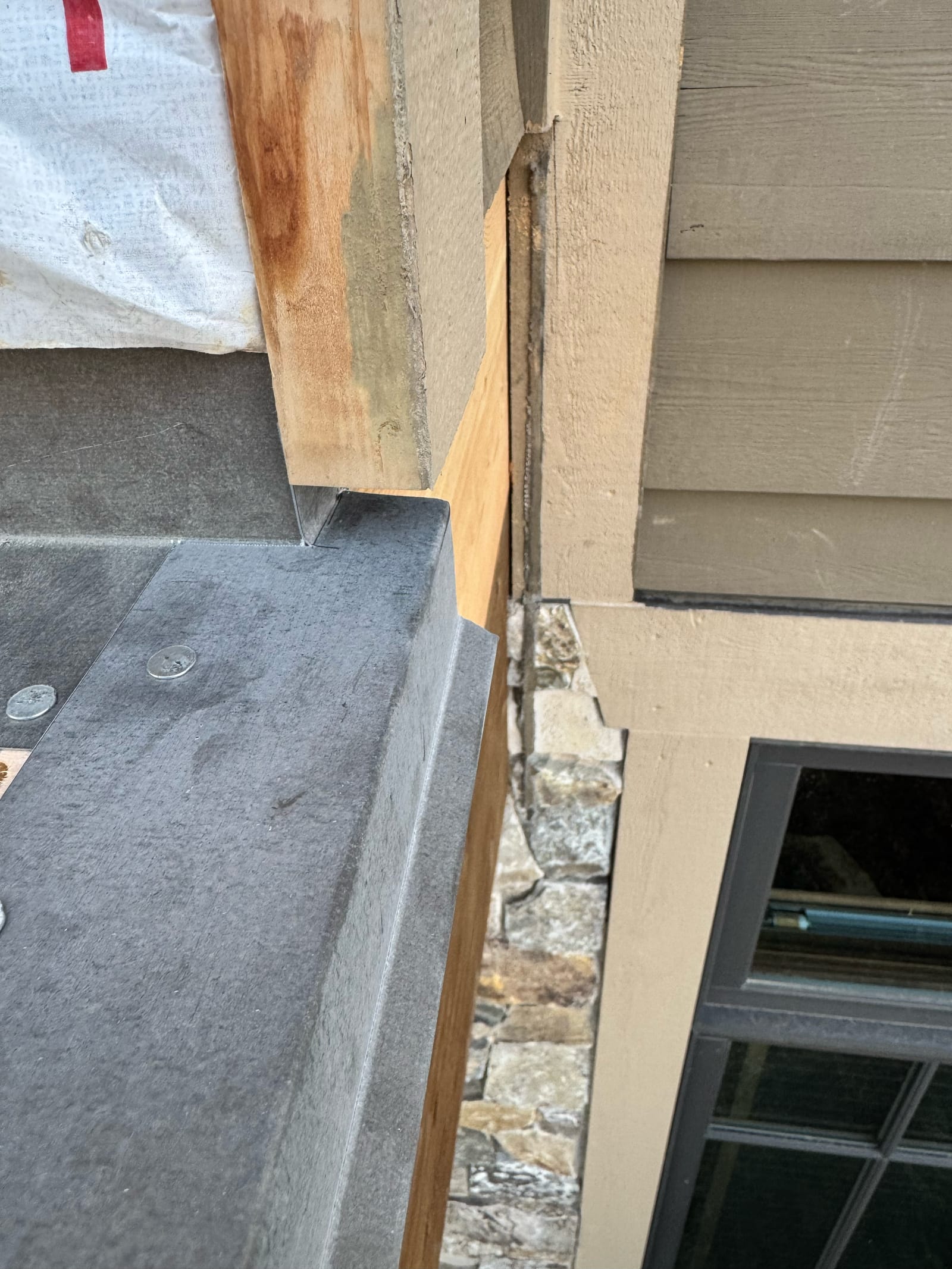
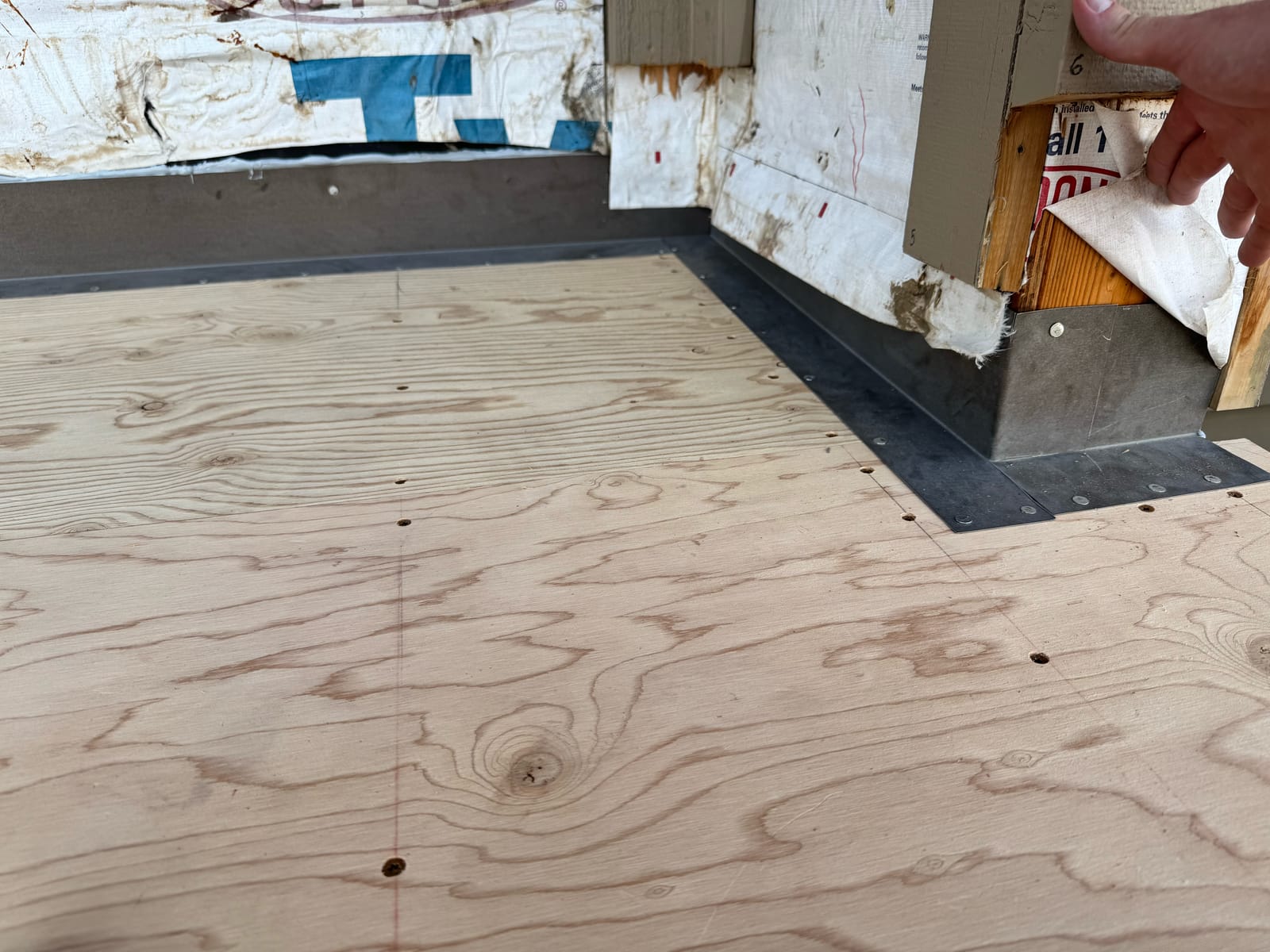
Metal pan flashing formed at a deck post base and tucked behind the weather-resistive barrier.
Flashing detail. Metal pan flashing formed at a post base and lapped up behind the weather barrier.
Outside-corner metal flashing at the walk-deck to wall transition.
Flashing detail. Outside-corner metal at the deck-to-wall transition.
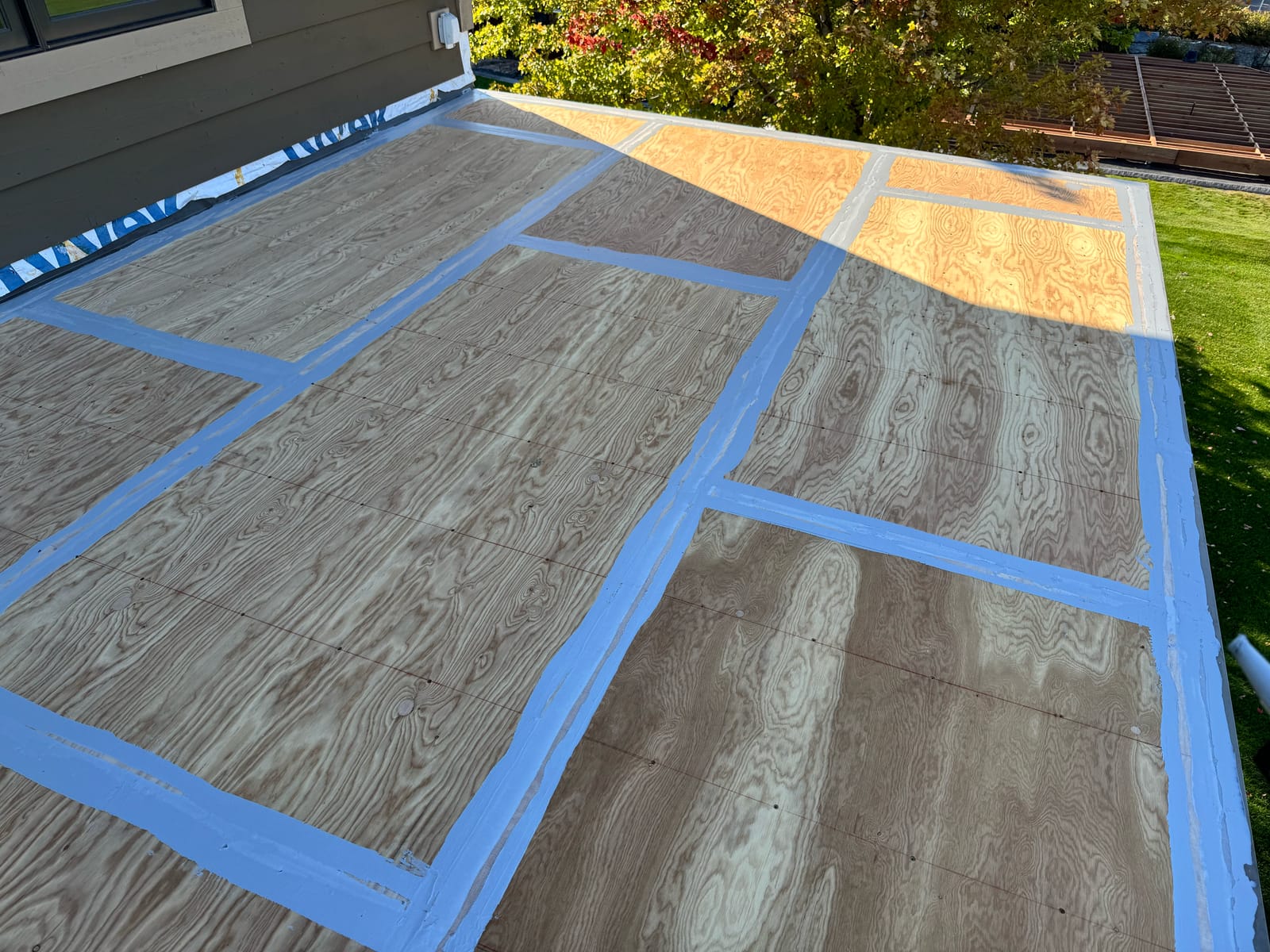
Plywood deck seams and fastener lines sealed with liquid-applied flashing.
Every plywood seam and fastener line detailed with liquid flashing before the membrane.
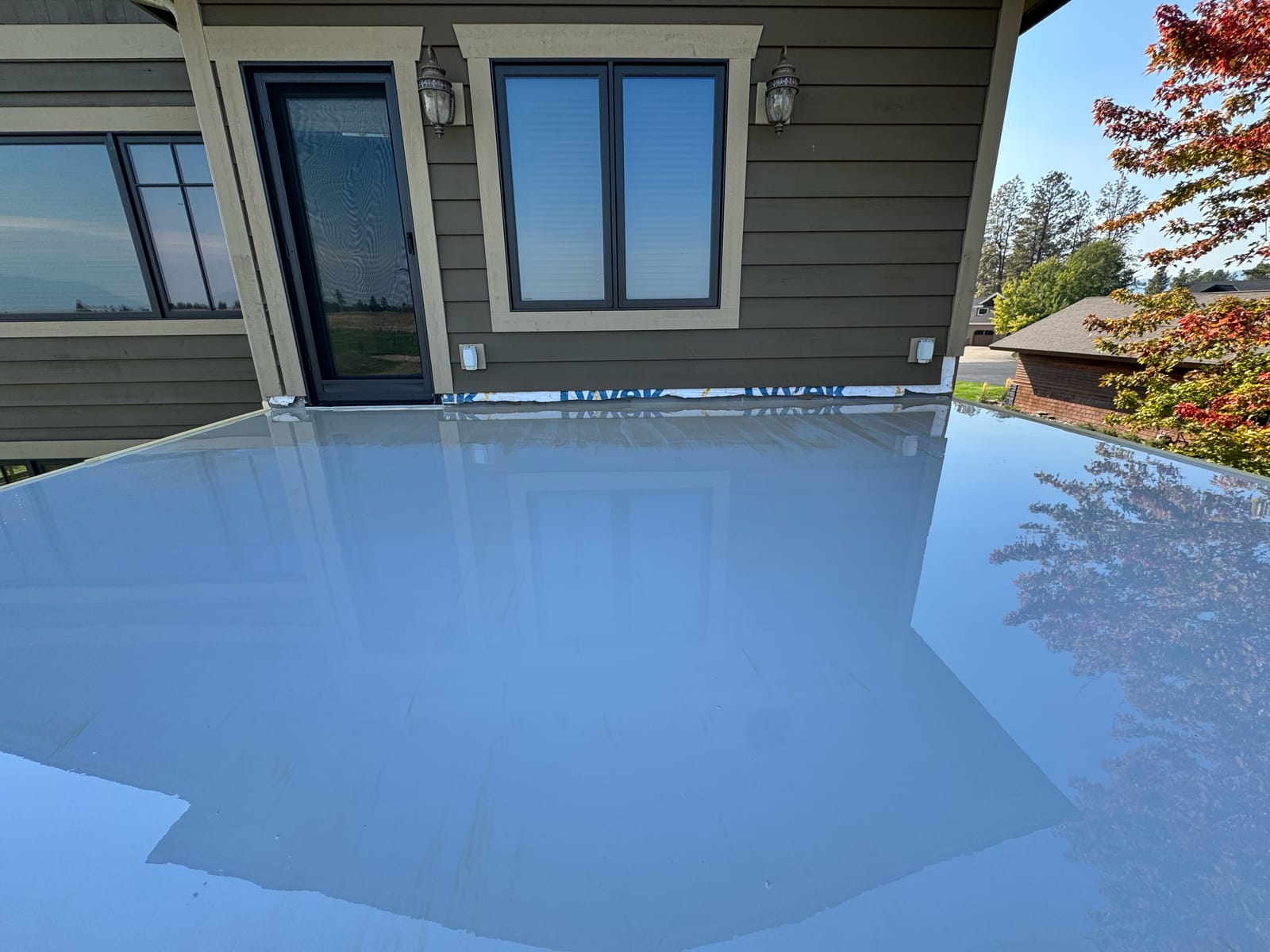
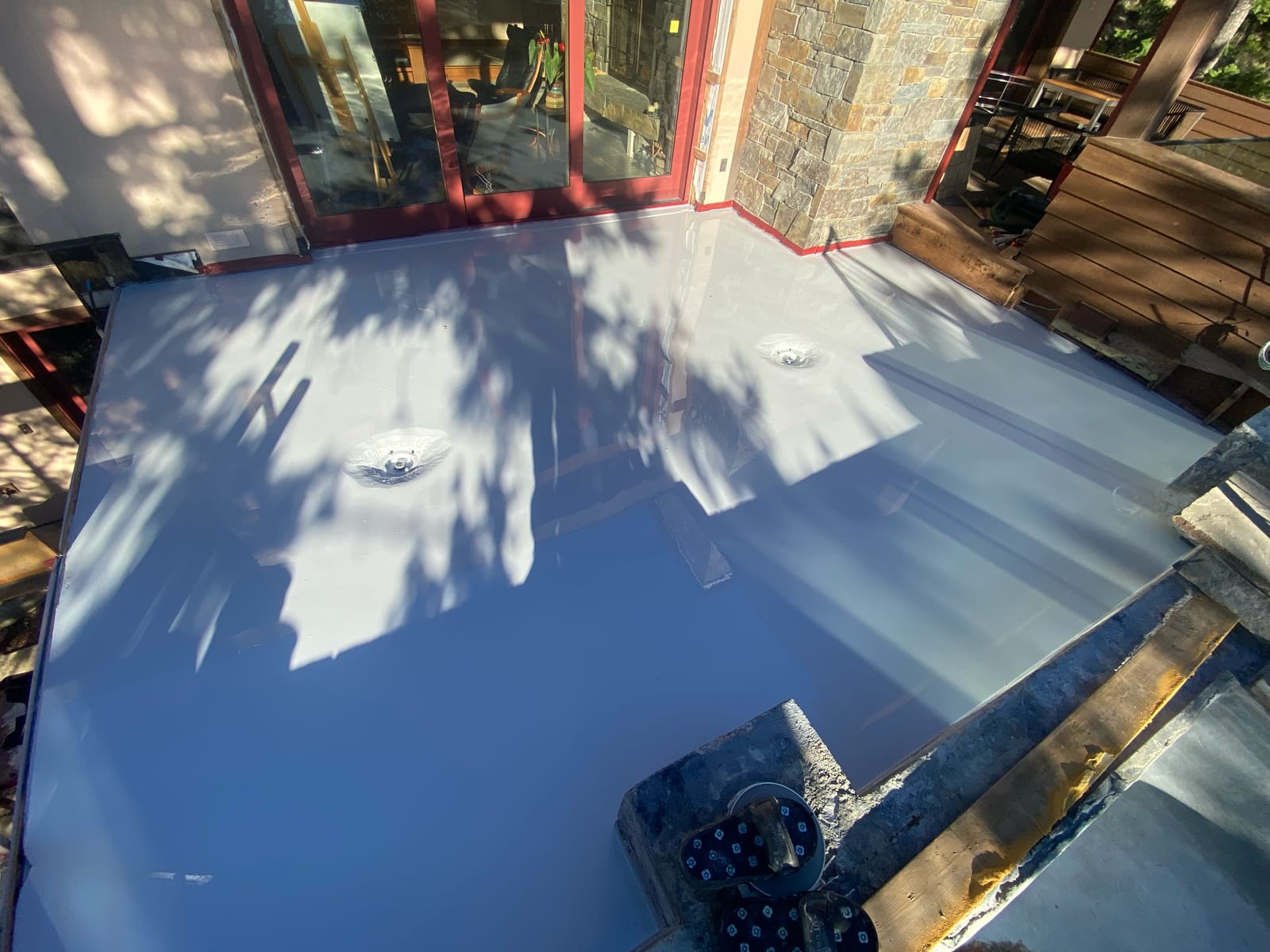
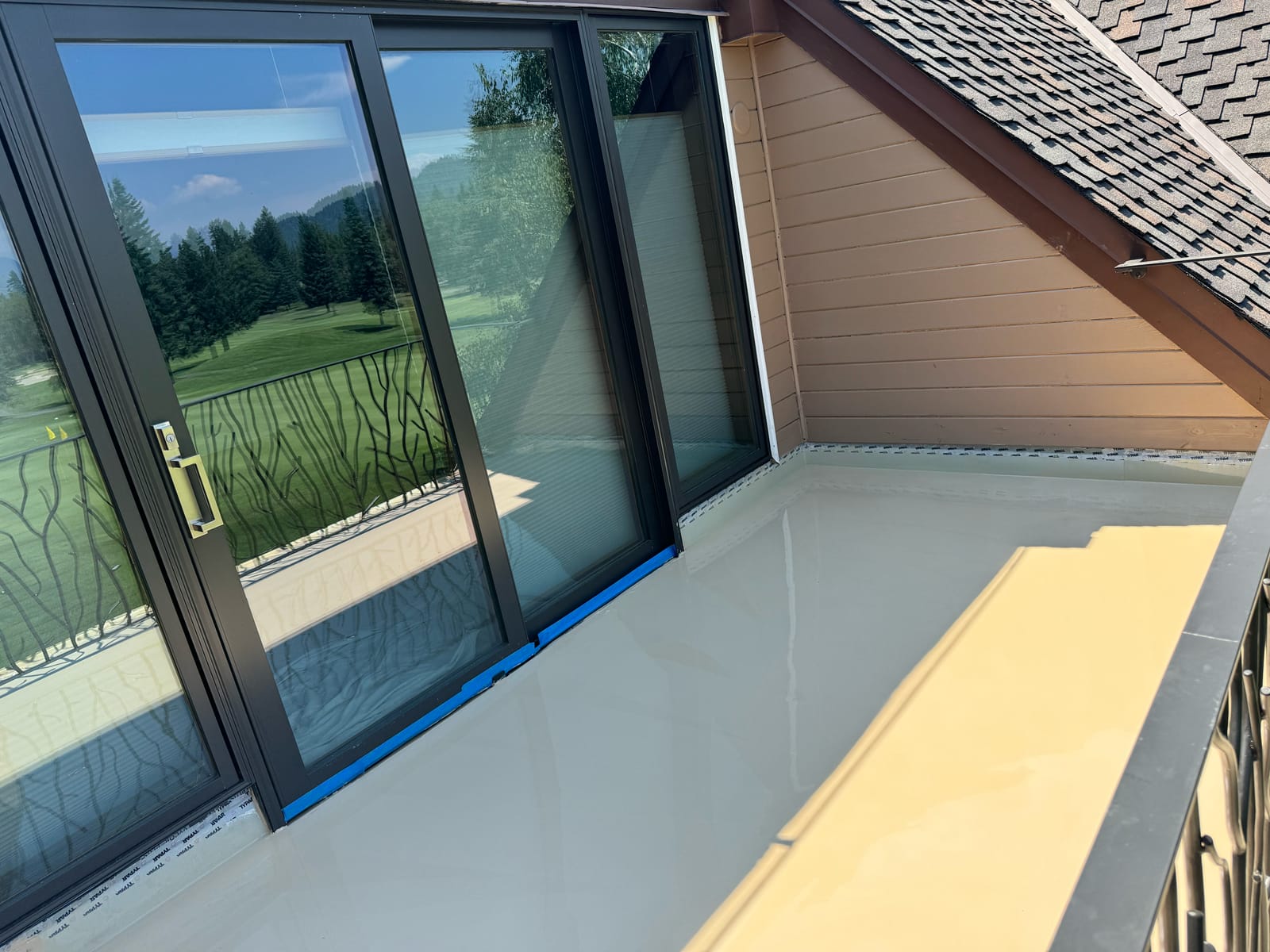
Wet fluid-applied waterproofing membrane over the prepared deck substrate.
Fluid-applied waterproofing flooded over the prepped substrate.
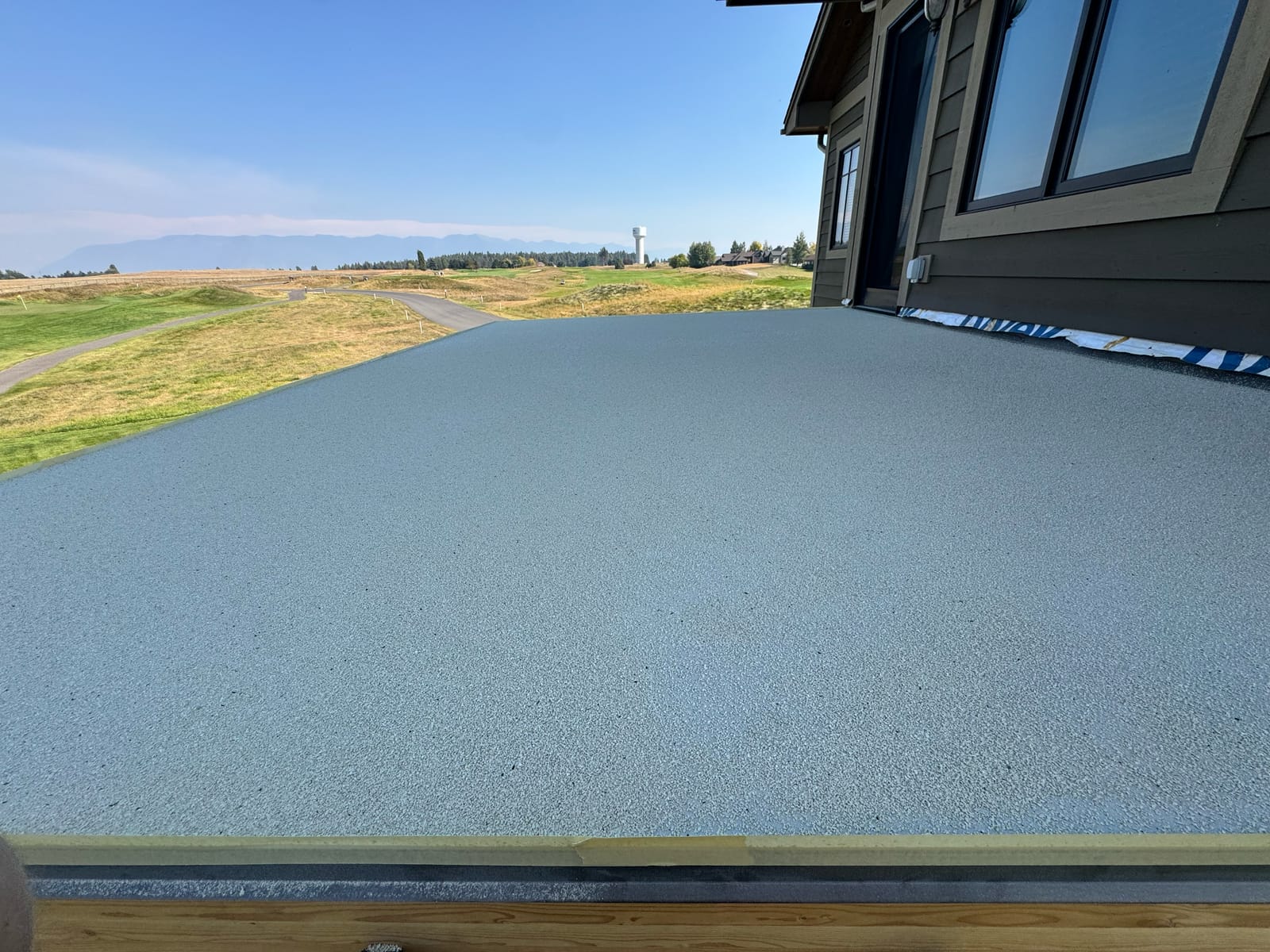
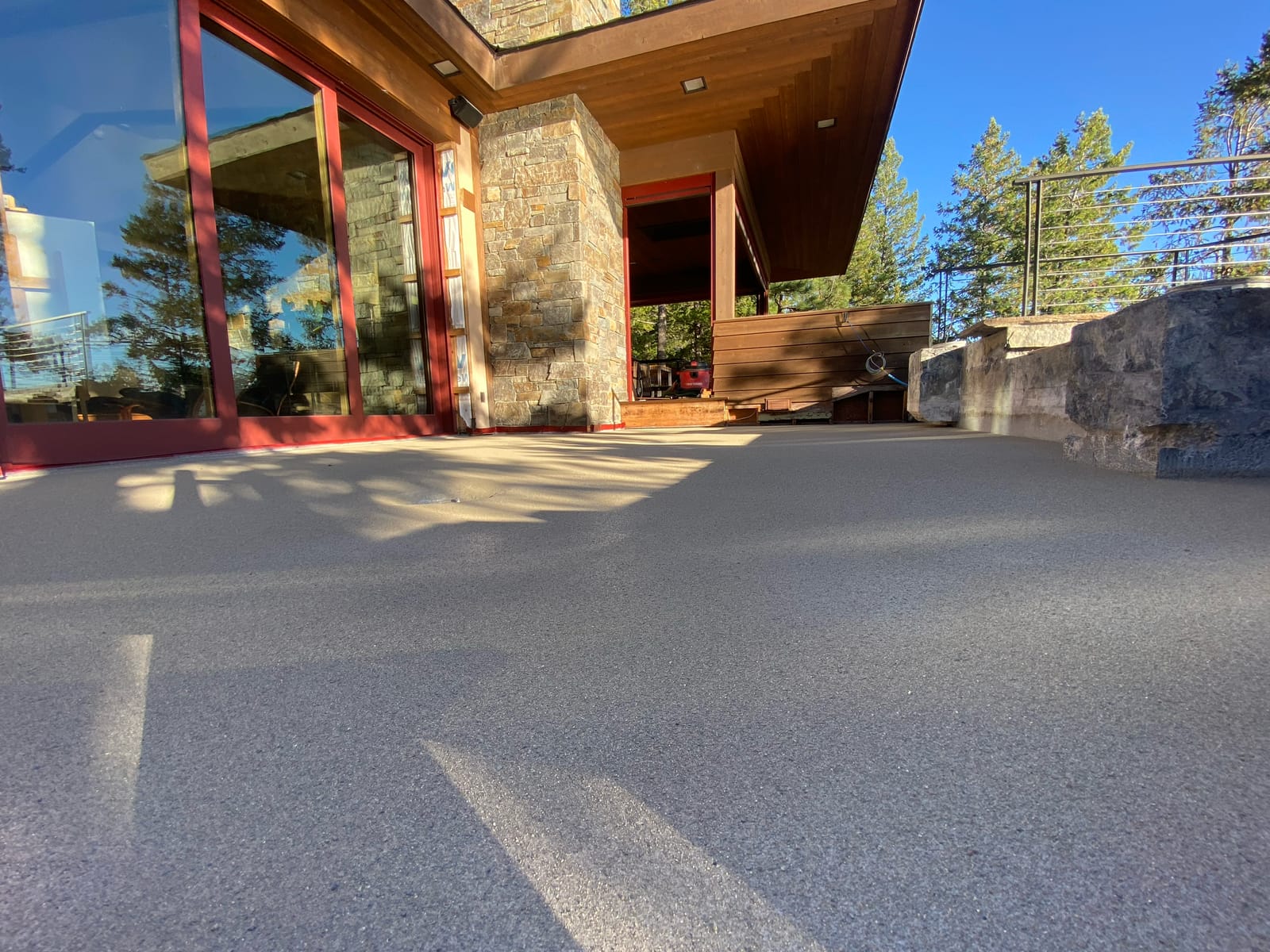
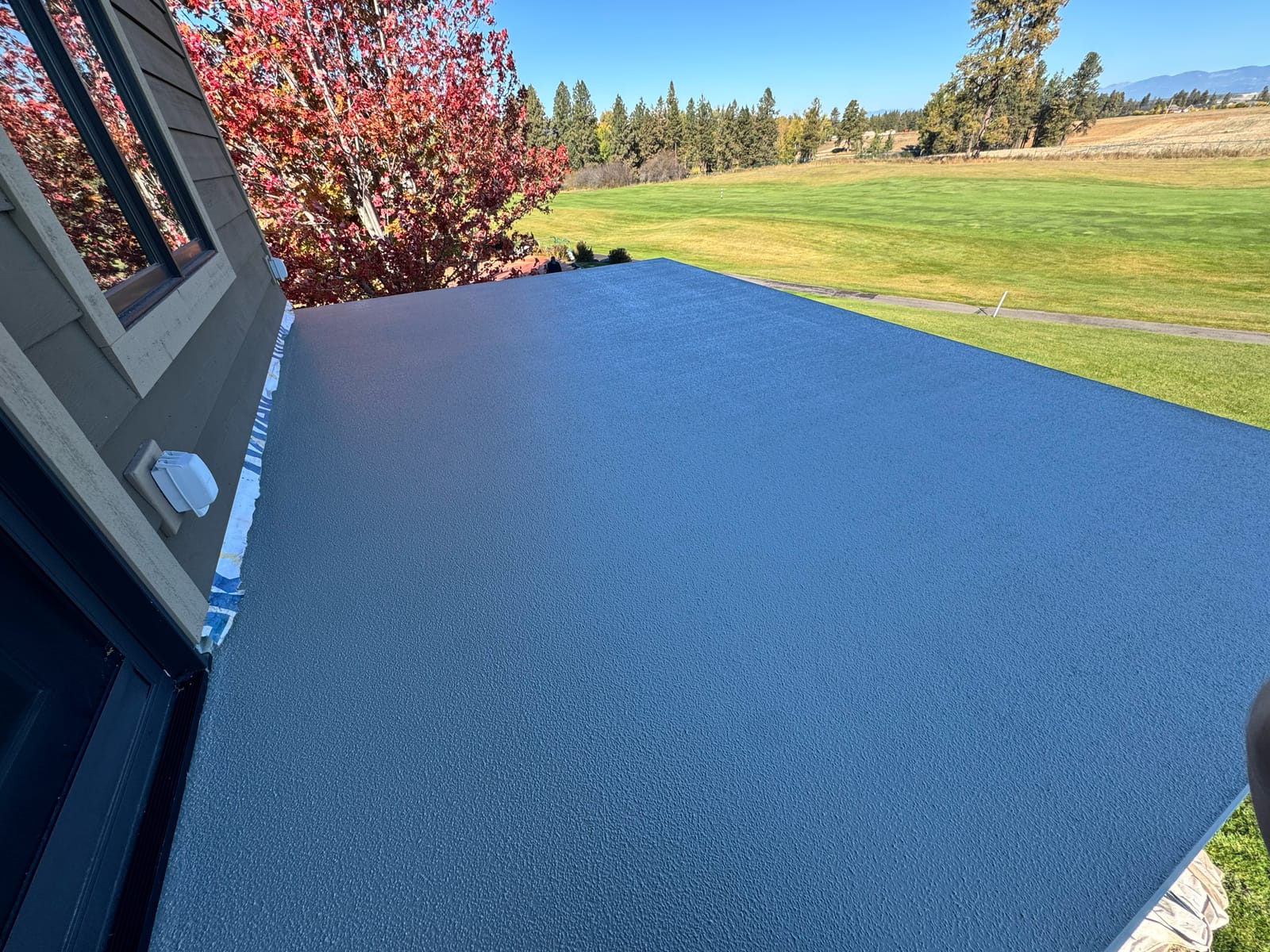
Finished textured waterproof walk-deck surface overlooking mountains.
Finished textured, slip-resistant surface. Water sheds to the edge and off the deck.

Lakeside, MT · Concrete Deck

Waterproofed Concrete Deck

A concrete deck on a Lakeside home that needed to be watertight before it could be tiled. Bare concrete wicks and passes water, so we primed it with a moisture barrier, built up a fluid-applied base coat, and broadcast sand into the coat to give the tile a bonded bed to set into.

The waterproofing goes down before the tile. The moisture-barrier primer locks down the slab, the base coat carries the waterproofing across it, and sand broadcast into the wet coat leaves a bonded surface for the thinset and tile. The finished floor stays dry because the layer under it is already a membrane.
Deck Waterproofing

Field sequence

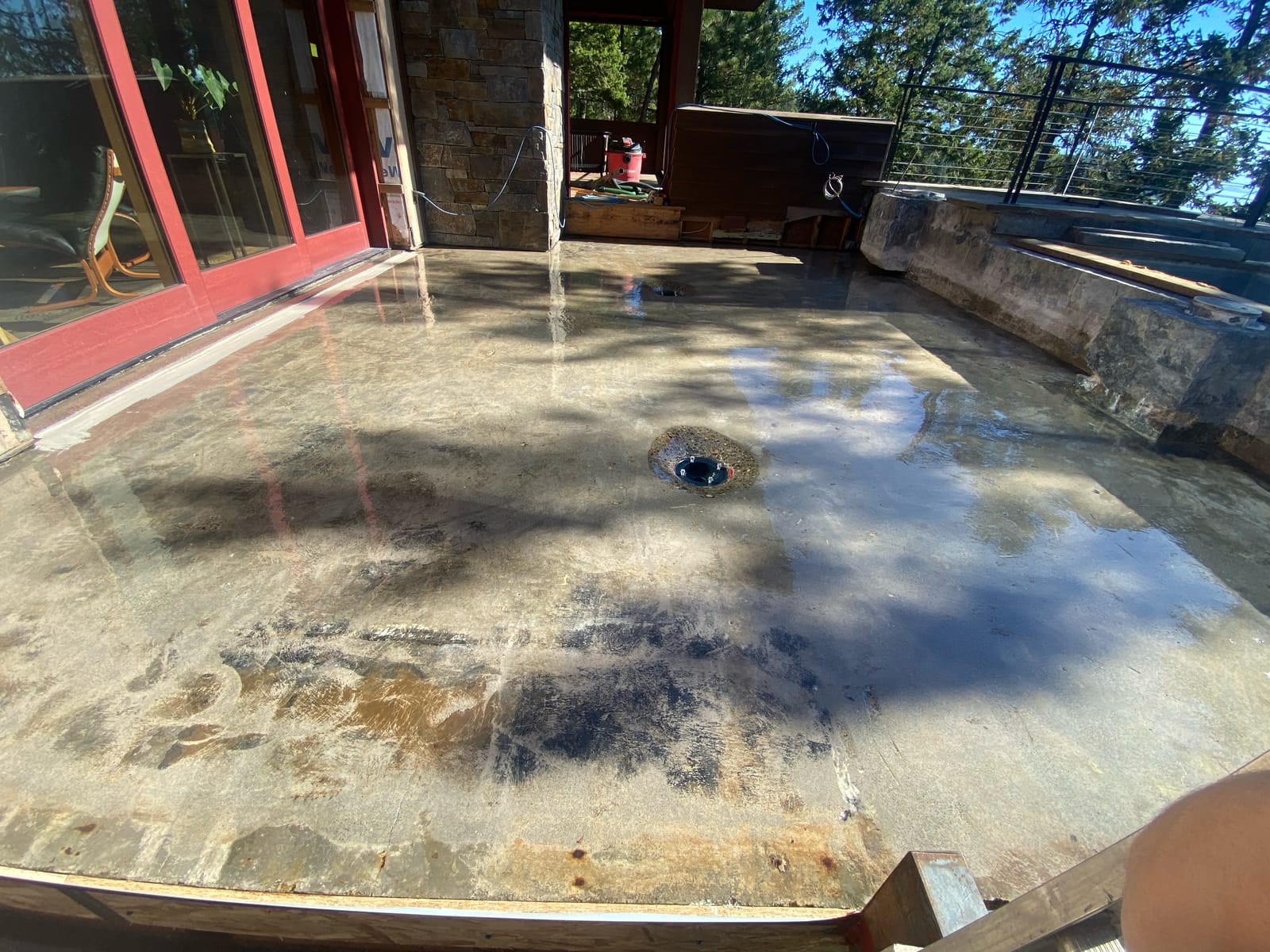
Moisture-barrier primer applied over the existing concrete deck slab.
Moisture-barrier primer rolled over the prepped concrete slab.
Light gray fluid-applied base coat over the primed concrete deck.
Fluid-applied base coat built up over the primed slab.
Sand-broadcast waterproofing finish over the concrete deck, ready for tile.
Sand broadcast into the base coat, leaving a bonded bed ready to be tiled over.

Whitefish, MT · Balcony

Waterproof Balcony

An exposed balcony over living space on a Whitefish home. The old traffic coating had cracked and was letting water into the structure, so we took it down to a new plywood substrate and rebuilt it with metal flashing, reinforced seams, and a fluid-applied deck system.

The waterproofing lives under the finish. Metal edge flashing is set at the perimeter and turned up the walls, the plywood seams are reinforced with fabric, and the base membrane ties it together before the textured traffic coat goes down. Water sheds to the edge instead of into the framing below.
Deck Waterproofing

Field sequence

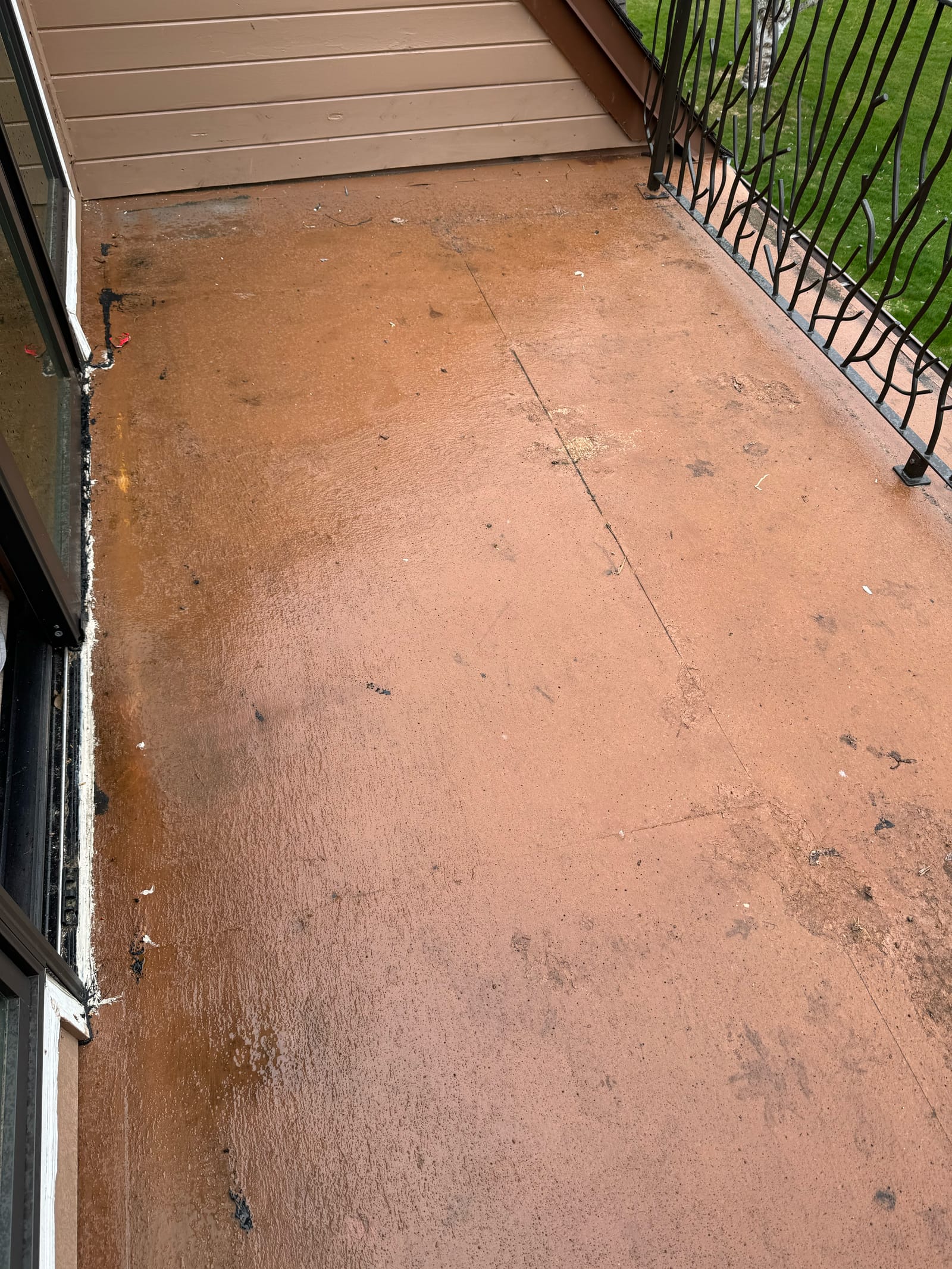
Worn, cracked balcony deck coating before the rebuild.
An old traffic coating cracked and letting water through.
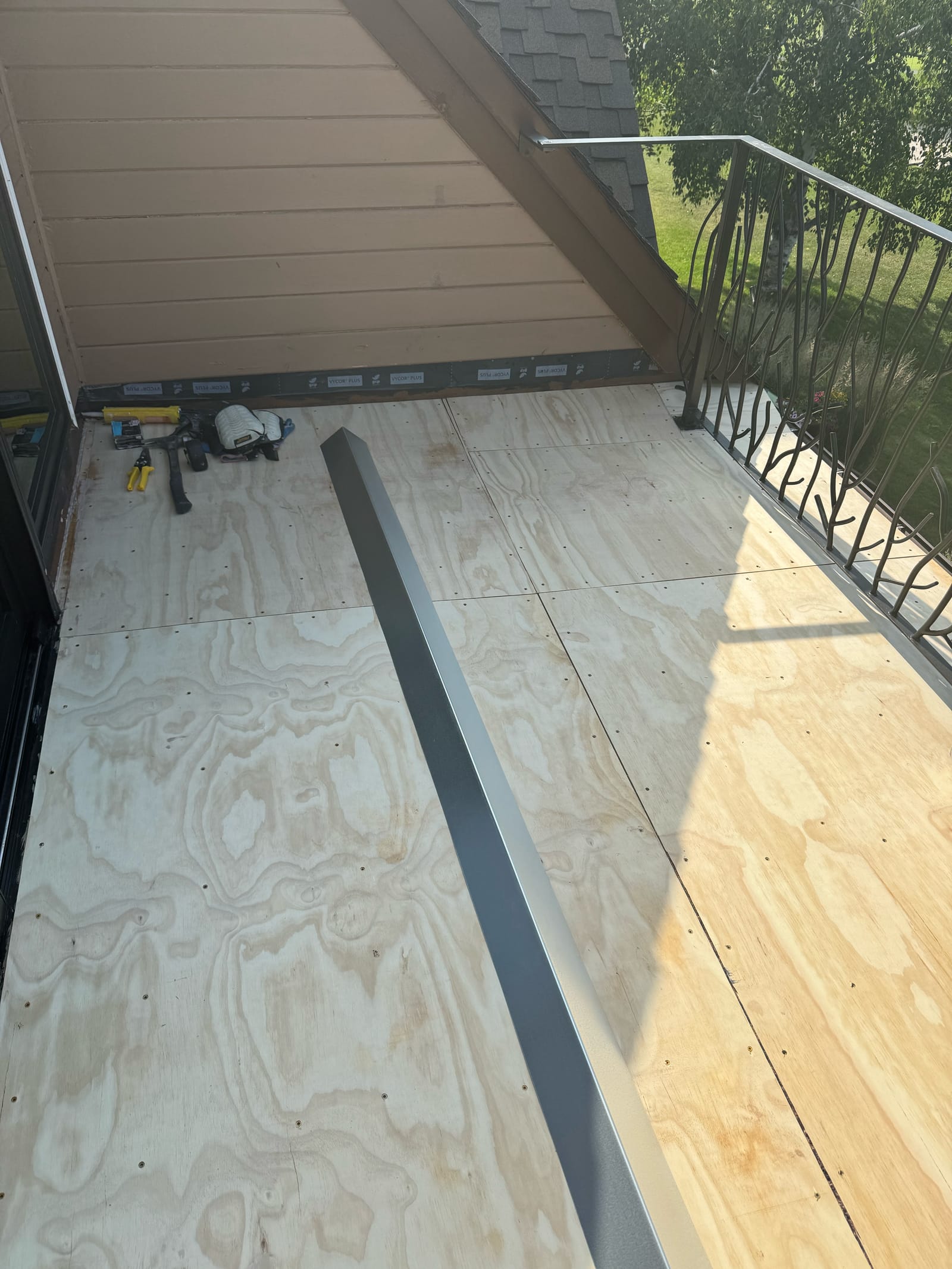
New plywood balcony substrate with metal edge and drip flashing.
Flashing detail. New plywood substrate with metal edge flashing formed along the slope and perimeter.
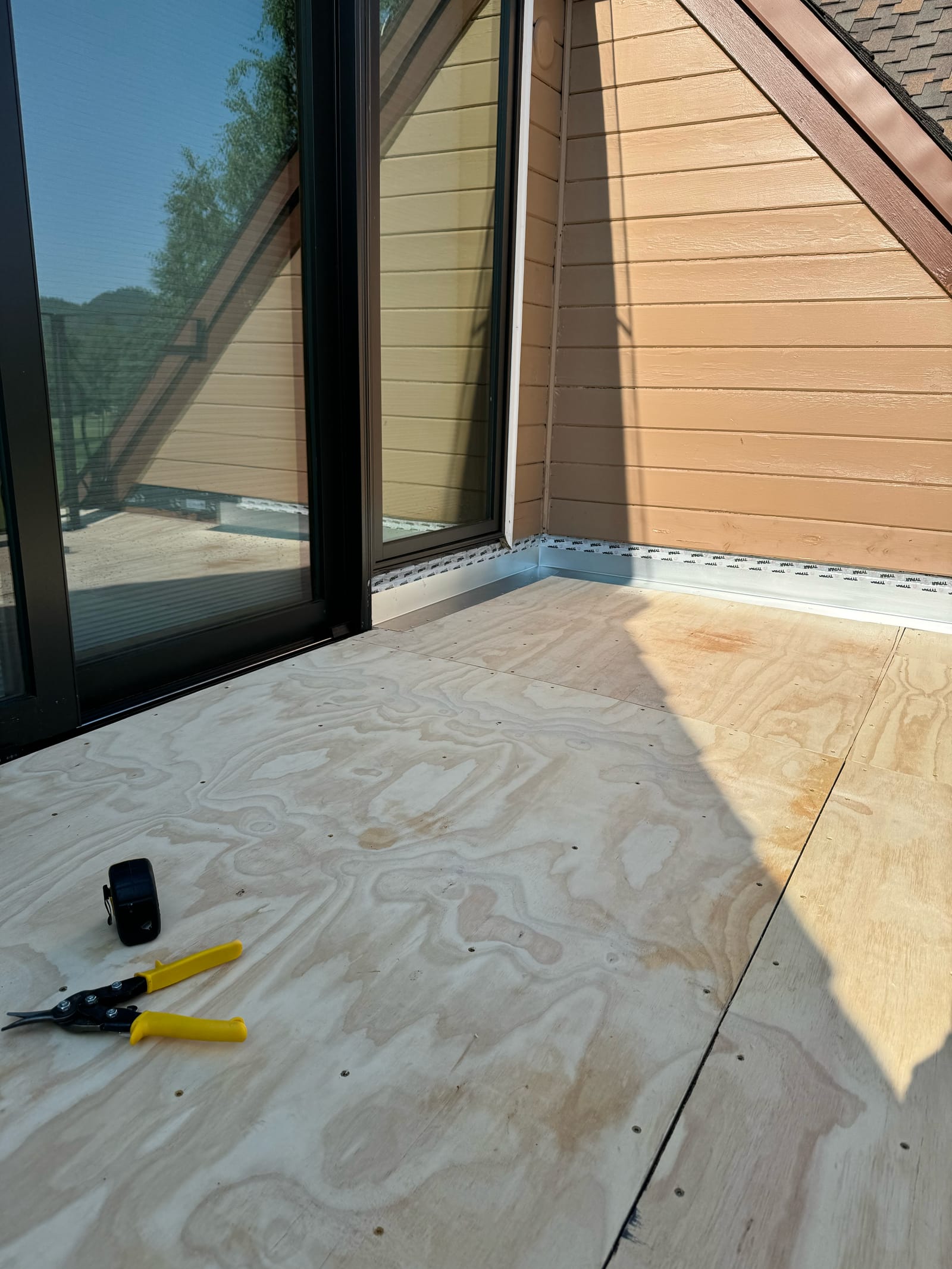
Metal wall-transition flashing and taped door threshold on the balcony.
Flashing detail. Metal at the wall transition, with self-adhered flashing taped in at the door threshold.
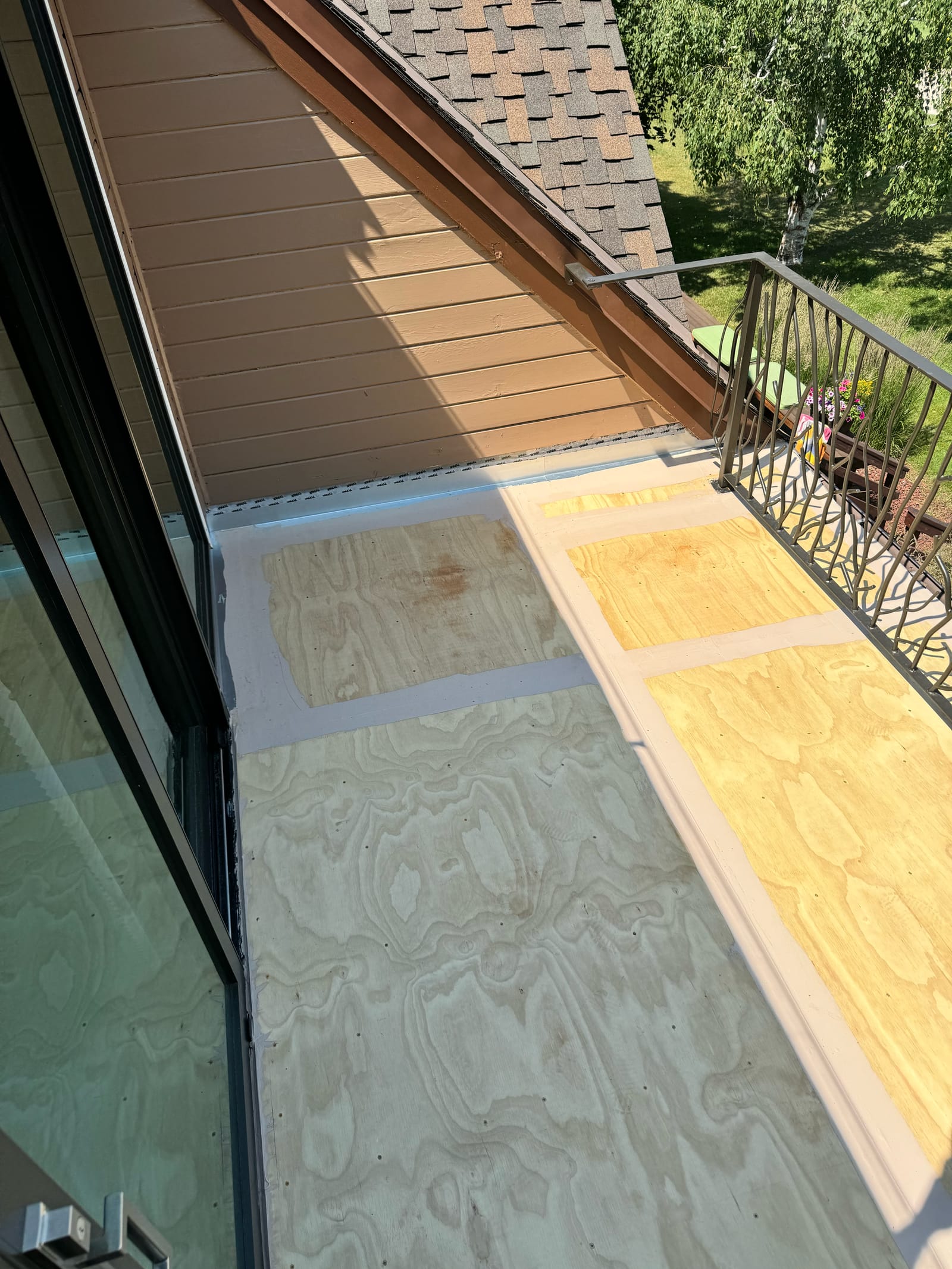
Balcony plywood seams reinforced with embedded fabric detail coat.
Every plywood seam reinforced with embedded fabric before the membrane.
Wet base waterproofing membrane over the prepared balcony, golf course beyond.
Base waterproofing membrane flooded over the prepped substrate.
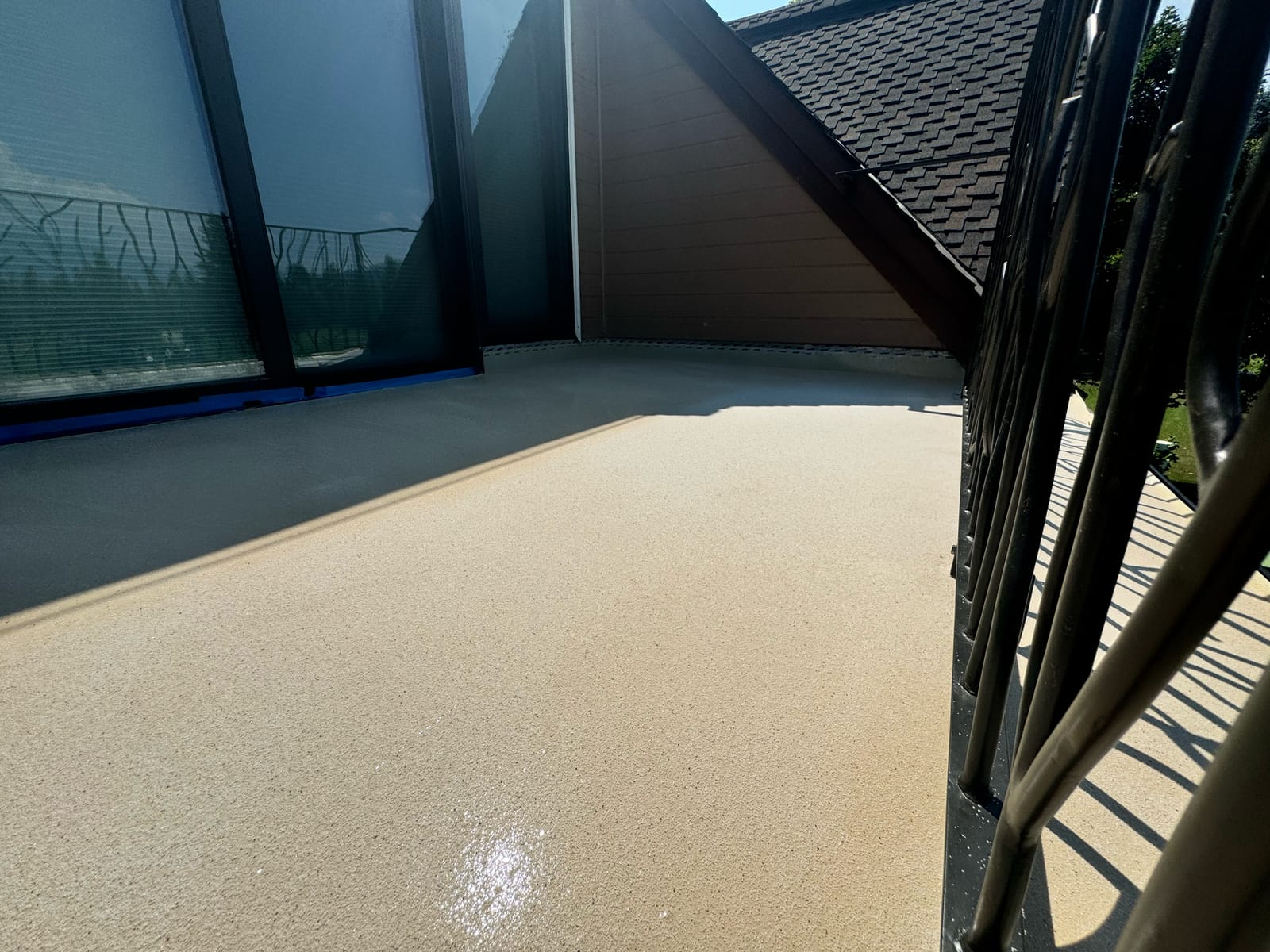
Finished textured waterproof balcony surface on a Whitefish home.
Finished textured, slip-resistant surface. Water sheds to the edge and off the deck.